Alcohol and Kratom: The Differences and Interactions Everyone Wants to Know

Table of Contents
- Kratom is a Southeast Asian plant with alkaloids that affect opioid, adrenergic, serotonin, and dopamine receptors.
- Alcohol is a CNS depressant that enhances GABA and suppresses glutamate, causing predictable sedation and impaired coordination.
- Both kratom and alcohol are metabolized by the liver, although differently; still, mixing them is not recommended and increases risk.
- Legal status differs: alcohol is federally legal for adults 21+, regulated by states, while kratom's legality varies widely and is volatile.
What Is Kratom?

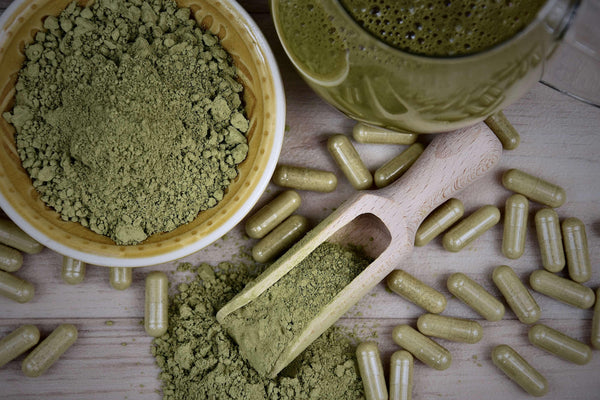
Although originally chewed raw or sipped as a tea, these days, kratom comes in several forms: raw powder, capsules, extracts, tinctures, and liquid shots.
Kratom's Mechanism of Action
This means it impacts energy, alertness, mood, and motivation. And it's also why one little plant can trigger so many different effects, ranging from uplifting and peppy all the way to sleepy and relaxing.
What Is Alcohol?

Pharmacologically, alcohol is classified as a central nervous system depressant because it slows down brain activity. Unlike kratom, there isn’t such a spectrum of effects. The more you drink, the more intense the effects become, with small amounts loosening things up and larger amounts eventually slowing things down.
Alcohol's Mechanism of Action
Kratom vs. Alcohol: Side-by-Side Comparison
Kratom |
Alcohol |
|
Source |
Kratom (Mitragyna speciosa) leaves |
Fermented sugars from grains, fruit, etc |
Mechanism of action |
Loose opioid agonist with additional activity at dopamine, adrenergic receptors, and serotonin receptors |
A central nervous system depressant that enhances GABA while reducing glutamate |
Typical lower‑dose effects |
Mild energy boost, increased alertness, and mood lift |
Mild relaxation, disinhibition, with mild motor impairment |
Typical higher‑dose effects |
Relaxation, release of physical discomfort, and sedation |
Strong intoxication, impaired judgment, and motor impairment |
Onset time |
Roughly 5–10 minutes, varies by form and serving |
Roughly 10–20 minutes, varies by beverage and food intake |
Duration |
Roughly 2 to 5 hours, depending on serving size and potency |
A few hours, depending on the amount consumed |
Metabolism |
Processed by the liver via CYP450 enzymes |
Processed by the liver via the alcohol dehydrogenase pathway and microsomal ethanol‑oxidizing system |
Common side effects |
Nausea, dizziness, dry mouth |
Nausea, dehydration, impaired coordination |
Addiction potential |
Can cause dependence and withdrawal |
High dependence potential; severe alcohol use disorder common and often disabling |
Overdose risks |
Limited data; risk increases when combined with other substances |
Well-documented; can be life-threatening at high levels |
Legal status |
Varies widely by jurisdiction; often sold as a supplement or controlled substance |
Legal and widely available, but regulated (age limits, DUI laws, etc.) |
How Kratom Feels Compared to Alcohol

Can You Mix Kratom and Alcohol?
Why? Because both substances affect the central nervous system, and even at reasonable serving sizes, both can act as depressants. If you combine them, you're potentially compounding these effects—stacking sedation, impaired motor control, and, most dangerously, respiratory depression.
Legal Status of Kratom and Alcohol
Kratom vs. Alcohol? Let's Review!

Is kratom safer than alcohol?
Can you drink alcohol while taking kratom?
How long should you wait between kratom and alcohol?
Does kratom affect alcohol tolerance?
Can kratom help reduce alcohol consumption?
What should you do if you experience adverse effects after combining alcohol and kratom?
FDA Disclaimer
These statements have not been evaluated by the Food and Drug Administration. The efficacy of these products has not been confirmed by FDA-approved research. These products are not intended to diagnose, treat, cure, or prevent any disease. All information presented here is not meant as a substitute for or alternative to information from health care practitioners. Please consult your healthcare professional about potential interactions or other possible complications before using any product. The Federal Food, Drug, and Cosmetic Act requires this notice.First time customers only