







May 18, 2026
Is There Really a Difference? Kratom Strains and Veins Explained

Table of Contents
- What Is Kratom, Really?
- Kratom Veins Explained
- What Are the Different Strains of Kratom?
- What Kratom Strains Really Mean (And What They Don’t)
- Veins vs. Strains: Which Matters More?
- So, Why Do Kratom Strains Feel Different?
- Black Sheep’s No-BS Approach to Kratom
- How To Choose Kratom More Effectively
- Stop Chasing Strains — Start Checking Alkaloid Content
KEY TAKEAWAYS
- Kratom strains and vein colors (white, green, red) are marketing conventions with no scientific basis; they do not reliably predict the effects of kratom products.
- The true determinant of kratom's effects is its alkaloid content, which varies by origin, harvest time, and processing and can only be accurately assessed through third-party lab testing.
- For effective and predictable kratom use, consumers should prioritize products with verified alkaloid test results, standardized formulations, and start with low doses rather than relying on strain names or vein colors.
White, green, and red—these have always been the three main kratom strains (aka different types of kratom) around which the market has revolved. White kratom strains are supposed to be the most stimulating, red is said to be sleepier, and green sits somewhere in the happy middle.
But are these classifications accurate? Are they a reliable way to predict effects and steer experience?
TDLR: As it turns out, the different types of kratom strains aren’t based on any botanical science. Blindly picking a white strain over a red isn’t going to guarantee a more social evening.
So it’s time to take a hard look at all the claims about strains and vein color, to explain what’s actually going on here. Most importantly, it’s time to give much better guidance on how to get the effects you’re seeking.
What Is Kratom, Really?

Kratom, aka Mitragyna speciosa, is a tree species native to Southeast Asia. It's long been cultivated, with its leaves used across Thailand, Malaysia, Indonesia, and beyond for their medicinal and social properties.
In the fields, locals simply chewed fresh leaves for their mildly stimulating properties. The leaves were also dried and used to make a drink, often tea. These days, kratom has become a global phenomenon and made its way into many new types of products beyond simple, steeped leaves.
We now find ourselves in this modern kratom space, with a market flooded with claims. You might have read them yourself: white vein types are uplifting and social, compared with the more sleepy and relaxing red-veined types.
But as one 2023 research paper explained, “In its native Southeast Asia, no distinction is made between kratom strains of different colors, nor are they advertised to be associated with distinct effects.”
Yet, all kratom still comes from the exact same plant species. So, what’s going on here?
Kratom Veins Explained
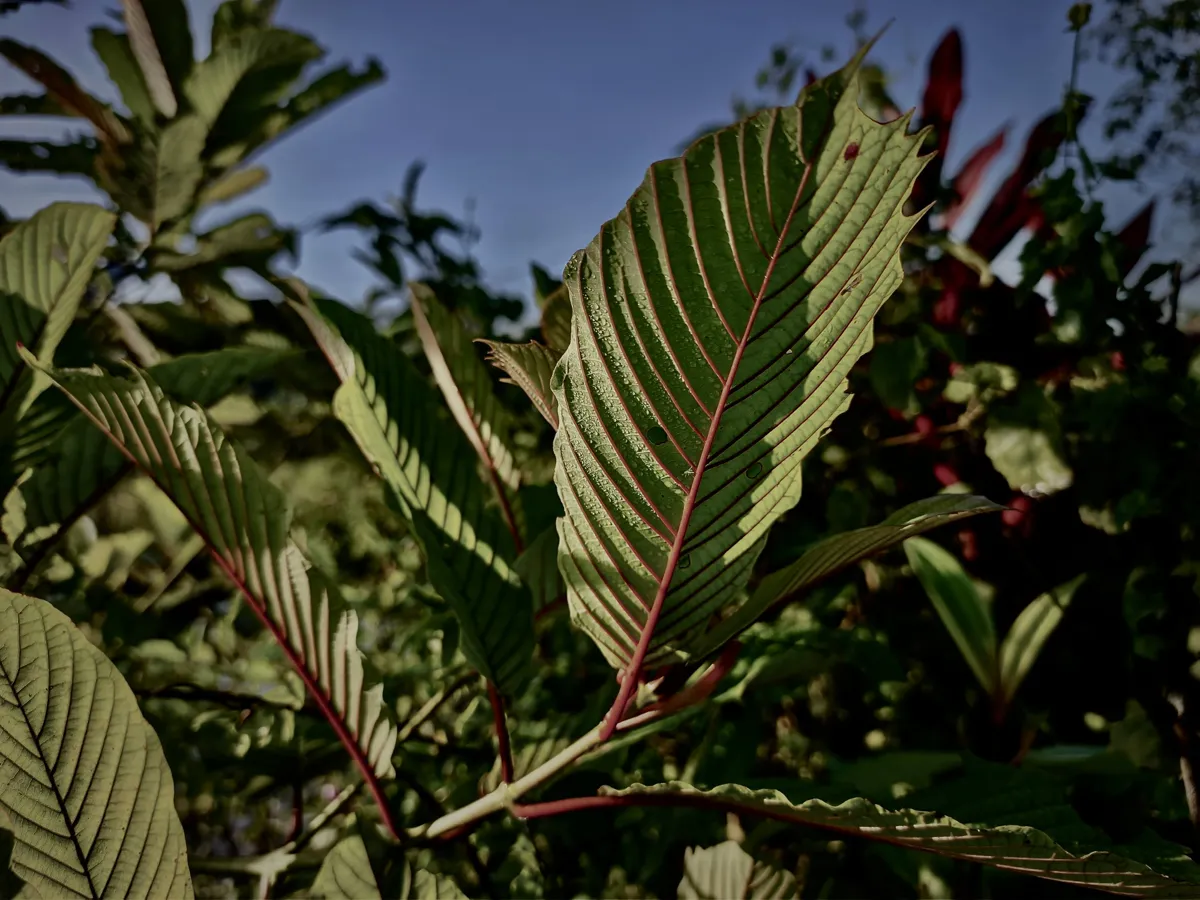
If you’ve been exploring kratom, you’ll see this strain-or-vein language just about everywhere. Unfortunately, most of this modern vein theory is inaccurate and misleading, but the vein-based marketing is trying to tell us something about the effects.
Today, you’ll find that kratom strains are divided into white, red, and green vein varieties. On the one hand, these categories are loosely tied to the vein color of the fresh leaves before processing. They’re also vaguely related to the country or origin—you might see branding like red Malay, white Thai, and green Thai.
Over time, this division by vein color came to be associated with distinct effects. Again, usually white kratom is sold as the most socially energizing and red as the most sedating, with green sitting somewhere in between.
Today, some kratom brands have taken these ideas and run wild with them. So much so that in that survey conducted by the aforementioned 2023 study, participants really did seem to associate specific effects with different strains of kratom.
Here is what survey participants reported:
| Red Vein | Green Vein | White Vein |
|
|
|
Realistically, it doesn’t so much matter what color the kratom is. What really drives effects is what alkaloids it contains. Alkaloids drive the kratom experience, and the alkaloid content varies by country, by forest, and by harvest time.
What Are the Different Strains of Kratom?
If vein color is the first layer of kratom naming, strain names are the second—and to make matters worse, the two are frequently used interchangeably.
Strain names are yet another confusing element slapped onto kratom labels, and you'll see them everywhere: Red Maeng Da, Green Bali, White Borneo, Green Malay. They sound specific, even scientific, but they're neither.
Most kratom strain names fall into one of two buckets: they reference a geographic region or the quality. Here’s a breakdown of kratom strains in a comparison chart:
| Name | Origin | Common Claims | The Reality |
| Maeng Da | Thailand; now grown widely across Indonesia |
|
|
| Bali | Named after the island of Bali, Indonesia, most is actually grown in Borneo or Sumatra. |
|
|
| Borneo | Island of Borneo (Indonesia/Malaysia); Kalimantan region specifically |
|
|
| Malay | Malay Peninsula; often sourced near the Kapuas Hulu region on the Malaysian border |
|
|
Notice anything here? The reality of strain names is that they are often misleading, and even downright wrong.
What Kratom Strains Really Mean (And What They Don’t)

Here are a few of the most common and pervasive myths you’ll hear about kratom:
- “All strains are completely different plant species.”
- “Vein color guarantees specific effects.”
- “You can rely on names alone to choose correctly.”
But here is the harsh reality: all kratom comes from the same species of plant (Mitragyna speciosa), and when it comes to effects, strain names are essentially meaningless. As we've explained, naming conventions might tell you about the fresh vein color and origins (though not always accurately). What they don’t actually describe is alkaloid content.
At the end of the day, alkaloid content is what drives the experience. Sure, if you don’t have any other information, vein color provides a rough idea of what to expect. But effects really boil down to the product's chemical composition, aka the alkaloid content.
Veins vs. Strains: Which Matters More?
The industry at large uses strains and veins pretty interchangeably when talking about kratom. But do you actually need to pay attention to either?
Strain names (like Maeng Da or Bali) and vein color (like green or red) are very inconsistent ways to categorize kratom. Neither strain nor vein offers true predictability, which is something only a third-party alkaloid test can tell you.
Just remember: kratom names, veins, or strain types aren’t true botanical differences. They are just naming conventions, and wildly unreliable ones at that. Even if strain or name were the same, you’ll discover a huge degree of variability between brands and even batches.
So, Why Do Kratom Strains Feel Different?
If strains of kratom are essentially meaningless when it comes to your personal experience, why do they feel different?
Again, the real drivers behind all of kratom’s effects are the product's alkaloid composition. Kratom leaves naturally contain high levels of mitragynine as well as a number of other secondary alkaloids, including 7-hydroxymitragynine.
Whether it's white strains of kratom or green kratom strains, there is always a certain degree of variability in each type's alkaloid content. It varies by region, tree, harvest timing, and processing method.
A red strain from one brand and a red strain from another can feel like very different products. Even batches from the same vendor can drift over time.
What matters for understanding effects is what's shown on the test results. Which is why it's time to shift your focus from strain names to lab results and dose. You'll have a much more reliable foundation for choosing kratom that works for you, not to mention an easier time predicting effects.
Black Sheep’s No-BS Approach to Kratom

If there is one thing we do differently at Black Sheep, it's backing our claims with test results, not naming conventions. We definitely don’t follow the herd in this regard.
Every batch goes through third-party lab testing, so we can build our products around consistent, predictable alkaloid content. This, of course, translates into consistent and predictable experiences.
How To Choose Kratom More Effectively
Instead of searching for the best white kratom strains or the best red kratom strains, it's time to reframe the questions around alkaloid content.
If you’re still trapped in the strain and vein lexicon of kratom, here’s how you can start choosing the best kratom strains for you based on more scientifically sound logic:
- Look for Alkaloid Test Result: A Certificate of Analysis (COA) from a third-party lab tells you what's actually in the product, including mitragynine and/or other alkaloid content, contaminants, and potency. If a brand can't show you a COA, keep looking.
- Prioritize Consistency Over Claims: A great batch means nothing if the next one is different. Look for brands that standardize their formulations and test consistently. Don’t take compelling strain names and good packaging as a read on quality.
- Start Low and Go Slow: Regardless of what the label says, individual response to kratom varies. Start with a smaller serving, assess how your body responds, and adjust from there. Before you dive headfirst into a heavily sedative dose, you’ll want to get a feel for the specific batch first.
Stop Chasing Strains — Start Checking Alkaloid Content
While kratom strains aren't a lie exactly, they're not transparent, and they are definitely not an accurate way to predict effects. White, red, and green veins, or origin-related strain names, can point you in a general direction, but they do not guarantee what's in the product.
What actually matters is alkaloid content, and that content must be established with a test result.
That's entirely why we’re moving beyond simplistic strain names at Black Sheep, to focus instead on standardized extracts and third-party testing. If you're ready to stop guessing and start choosing more predictable effects, that's what we're here for.
FDA Disclaimer
These statements have not been evaluated by the Food and Drug Administration. The efficacy of these products has not been confirmed by FDA-approved research. These products are not intended to diagnose, treat, cure, or prevent any disease. All information presented here is not meant as a substitute for or alternative to information from health care practitioners. Please consult your healthcare professional about potential interactions or other possible complications before using any product. The Federal Food, Drug, and Cosmetic Act requires this notice.SUBSCRIBE & SAVE
First time customers only




These statements have not been evaluated by the FDA and are not intended to diagnose, treat or cure any disease. Always check with your physician if you are taking prescription medication before starting a new dietary supplement.